
Every traveller remembers their first great flight — the hum of the engines, the anticipation before take-off, the sense that you’re heading somewhere extraordinary. But for those who crave adventure beyond the terminal, there’s one destination that outshines every skyline: Mount Kilimanjaro.
The journey from airport runway to the Roof of Africa is more than just travel — it’s transformation. Climbers who take on the challenge with a trusted climb operator discover that adventure doesn’t start at 30,000 feet; it begins the moment you decide to chase something bigger than a view.
The Ultimate Layover: Tanzania
Tanzania isn’t just a stopover — it’s a gateway to wild beauty. After landing in Arusha or Kilimanjaro International Airport, most travellers spend a night at the base of the mountain, where jungle air mixes with the distant sound of wildlife. It’s the calm before the climb, a reminder that some destinations ask for presence, not speed.
And while flights can whisk you around the world in hours, Kilimanjaro insists you slow down. Success here depends not on altitude records or adrenaline, but on patience and rhythm.
Preparing for Altitude, Not Attitude
Climbing Kilimanjaro is often described as “a trek anyone can do — with the right mindset.” It’s true. No technical gear, no ice axes — just determination, endurance, and smart pacing.
Understanding how long to climb Kilimanjaro helps travellers plan properly. While some itineraries promise fast ascents, the most rewarding climbs take 7–8 days, allowing the body to adjust to altitude and the mind to absorb the experience.
Like adjusting to a new time zone, acclimatisation is a balance of patience and preparation. The best journeys — in the air or on the ground — are those that find the right pace.
The Flightpath to Freedom
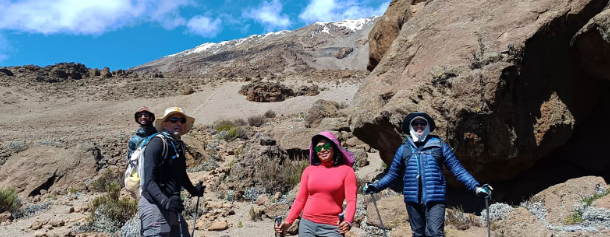
Every day on Kilimanjaro feels like ascending through invisible layers of the sky. You start in rainforest clouds, then pass through alpine meadows, before walking across lunar-like deserts that resemble a world far above the Earth.
At dawn on summit day, as the sky turns violet and the first light hits the glaciers, the horizon looks like the edge of space. It’s a view no first-class ticket can buy — a view you have to earn.
Beyond the Summit
When climbers reach Uhuru Peak — Swahili for “freedom” — they often describe a strange mix of exhaustion and peace. The journey upward mirrors something deeply human: our instinct to rise, to push beyond comfort, to see what lies above the clouds.
For travellers used to speed, Kilimanjaro is a rare reminder that not every journey needs a shortcut. Some are meant to be taken one careful step at a time.
Next time you scan your flight options and dream of adventure, remember this: a plane can take you across the world, but only you can take yourself to the top of Africa.
And that climb — like every great trip — starts the same way: with a single decision to go.