
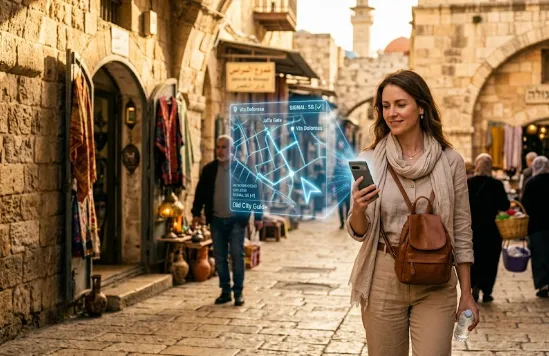
Navigating a new country is an adventure, but staying connected makes it smoother, safer, and infinitely more enjoyable. In Israel, a nation brimming with ancient history and cutting-edge technology, your smartphone isn’t just a communication device; it’s your map, translator, guide, and connection to loved ones. While local giants like Pelephone, Partner, and Cellcom dominate the domestic market, travelers have a unique set of considerations. This guide cuts through the jargon to offer practical advice on how to keep your phone buzzing without breaking the bank, whether you’re exploring the bustling markets of Tel Aviv, the historic streets of Jerusalem, or the serene landscapes of the Negev desert.
Understanding Israel’s Mobile Landscape
Israel’s telecommunications sector is highly competitive, offering robust 4G and increasingly widespread 5G coverage. The main players are Pelephone, Partner (formerly Orange), and Cellcom, which have been around for decades. In recent years, challengers like Golan Telecom and Hot Mobile have entered the fray, offering more budget-friendly options that have shaken up the market. For visitors, this competition translates into a range of choices, but also a bit of complexity. While domestic users enjoy generous plans, the challenge for travelers is finding a short-term, cost-effective solution that doesn’t involve steep roaming charges or complicated contracts.
Understanding which network offers the best coverage in your specific travel areas can be helpful, though generally, all major carriers provide good service in populated areas and along main highways. Remote regions, particularly parts of the Negev or the Golan Heights, might have spotty service regardless of the carrier. Most Israeli carriers offer prepaid plans, often marketed as ‘Talk&Talk’ or similar names, designed for those who prefer not to commit to a monthly subscription. However, these still require a physical SIM card and local registration.
Traditional SIM Cards: The Local Prepaid Approach
For many years, buying a local prepaid SIM card upon arrival was the go-to strategy for travelers. This approach typically involves purchasing a physical SIM card from a kiosk at Ben Gurion Airport (TLV), a dedicated carrier store in any major city, or even small convenience stores. You’ll usually need your passport for registration. Once activated, you can top up your balance with data, call minutes, and SMS packages. Plans can range from basic call/text packages to generous data bundles, often valid for a week or a month.
The advantages of a local SIM are clear: you get a local Israeli number, which can be useful for making local reservations or coordinating with tour guides, and local calls are generally very cheap. However, there are drawbacks. You have to physically swap out your home country’s SIM card, which means temporarily losing access to your home number for calls and texts unless you have a dual-SIM phone. The activation process can sometimes be a bit clunky, and language barriers might pose a slight challenge, though most airport staff and carrier store employees speak English.
The Rise of eSIMs for Seamless Connectivity
In recent years, eSIM technology has revolutionized how travelers stay connected. An eSIM, or embedded SIM, is a digital SIM that allows you to activate a cellular plan without needing a physical nano-SIM card. For travelers heading to Israel, eSIMs offer unparalleled convenience. Instead of searching for a local store, waiting in line, and fumbling with tiny cards, you can purchase and activate an eSIM plan online before you even leave home or upon arrival with an internet connection.
The primary benefit of an eSIM is eliminating international roaming fees, which can quickly become exorbitant. Most modern smartphones, including recent iPhone models (iPhone XS and newer) and many Android flagships, are eSIM compatible. Activating an eSIM is typically as simple as scanning a QR code or entering a few details provided by the eSIM provider. Many providers offer specific Israel eSIM plans that include various data allowances, often with options for calls and texts, tailored for short-term travel. This means you can keep your home SIM active for receiving critical calls/texts while using the eSIM for all your data needs, ensuring continuous connectivity throughout your trip.
Navigating Data Usage and Wi-Fi Hotspots
While an eSIM or local SIM provides reliable mobile data, it’s wise to manage your usage, especially if you’re on a limited plan. Before your trip, download essential apps like Waze or Moovit (for local navigation), Google Maps (for offline maps), and Google Translate for Hebrew. These can be data-intensive, so having them pre-downloaded saves valuable megabytes.
Israel is generally well-equipped with Wi-Fi hotspots. You’ll find free Wi-Fi in most hotels, many cafes, restaurants, and even some public spaces in major cities. Always prioritize using secure, password-protected Wi-Fi networks where possible. While public Wi-Fi is convenient, it’s less secure, so avoid conducting sensitive transactions (like online banking) when connected to an open network. For those who need constant, secure connectivity for multiple devices, consider a portable Wi-Fi hotspot, though these usually come with higher rental costs.
Making Calls and Sending Texts (Local & International)
With a local Israeli SIM or an eSIM, making local calls is straightforward. Dialing within Israel requires a 05X prefix (e.g., 050 for Pelephone, 052 for Cellcom, 054 for Partner), followed by the 7-digit number. For international calls, you’ll typically use a specific international dialing code (like 012, 013, or 014, depending on the carrier) before the country code and number. However, for most travelers, VoIP apps like WhatsApp, FaceTime Audio, Google Meet, or Zoom are the preferred methods for communicating with friends and family back home. These apps leverage your data plan, making international calls essentially free.
WhatsApp is particularly ubiquitous in Israel; it’s practically the default communication method for everything from personal chats to business inquiries. So, ensure you have it installed and set up before you arrive. This reliance on data-based communication further underscores the importance of a robust and affordable data plan. Providers of Cellesim travel eSIMs, for instance, focus on delivering flexible data plans that support this modern communication style, allowing you to stay in touch without worrying about traditional call charges.
Essential Tips for Staying Connected in Israel
Beyond choosing your connectivity method, a few practical tips can enhance your experience. First, ensure your phone is unlocked before you travel. If it’s locked to your home carrier, it won’t accept a local SIM or fully utilize an eSIM from another provider. Second, always carry a portable power bank. Between navigating, taking photos, and staying connected, your phone battery will drain faster than usual. Third, familiarize yourself with emergency numbers: 100 for police, 101 for ambulance (Magen David Adom), and 102 for fire. While you hope not to need them, having them handy is crucial.
Finally, remember that while technology is a fantastic tool, sometimes the best way to connect is to simply look up from your screen and immerse yourself in the vibrant culture and breathtaking sights around you. Staying connected in Israel is about striking the right balance: having the tools you need at your fingertips while also allowing yourself to be present in the moment.