Every great journey begins with a flight — but the best ones don’t end when the plane lands. For travellers chasing something beyond ordinary itineraries, Mount Kilimanjaro offers a rare invitation: to swap altitude gained by aircraft for altitude earned step by step.
For those preparing their climb with Team Kili tours, the adventure begins long before take-off. From choosing your route to adjusting your pace, smart planning transforms the trip from a distant dream into a seamless ascent.
Landing in the Heart of Adventure
Most climbers touch down at Kilimanjaro International Airport, a surprisingly calm gateway framed by savannah and sky. Within an hour, you’re in Arusha or Moshi — lively towns that serve as launchpads for both safari and summit.
Think of this stage as your descent from one kind of altitude to another. The air smells of rain and dust, the horizon rises with promise, and the journey feels suddenly real.
Setting Your Altitude Agenda
The first decision every traveller makes is timing. Understanding the climb timeline helps align your adventure with flight schedules, seasons, and stamina.
While some rush the ascent in five days, seasoned travellers know the magic lies in slowing down — typically seven or eight days. This gives the body time to acclimatise and the mind time to appreciate the transformation.
Altitude isn’t something to conquer; it’s something to harmonise with — much like a pilot reading air currents before a smooth landing.
The Route as Runway
Each trail up Kilimanjaro is like a different flight plan:
- Lemosho Route – the scenic long haul, offering breathtaking panoramas.
- Rongai Route – a quieter, northern approach ideal for those seeking solitude.
- Machame Route – a favourite for climbers who love variety and challenge.
Choosing your route is as personal as choosing an airline cabin — comfort, style, and experience all matter.
Preparing for the Elements
Unlike the predictable environment of a plane cabin, Kilimanjaro’s conditions shift daily. One hour you’re walking through rainforest mist; the next, you’re stepping across a desert of volcanic dust.
Packing light yet smart becomes an art form — moisture-wicking layers, reliable boots, and a mind open to change. The climb teaches adaptability, a skill every traveller — and every pilot — values.
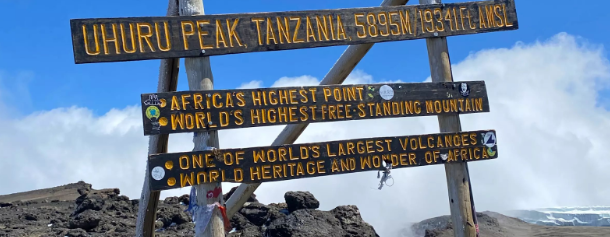
Touching the Roof of Africa
Summit morning begins in darkness. Guided by headlamp and heartbeat, climbers ascend toward a horizon that slowly turns gold.
When the sun rises over the African plains, the view feels almost aerial — a moment suspended between earth and sky. It’s the kind of silence that doesn’t exist anywhere else, even at 35,000 feet.
The Descent Home
After the summit, descending feels like landing: gentle, reflective, and grounding. The return flight carries something more valuable than souvenirs — perspective.
You’ve learned that true altitude isn’t measured in metres or miles, but in mindset.
For travellers who live to explore, Kilimanjaro is the perfect connection between flight and purpose — proof that the greatest journeys don’t just lift you off the ground; they lift you from within.