
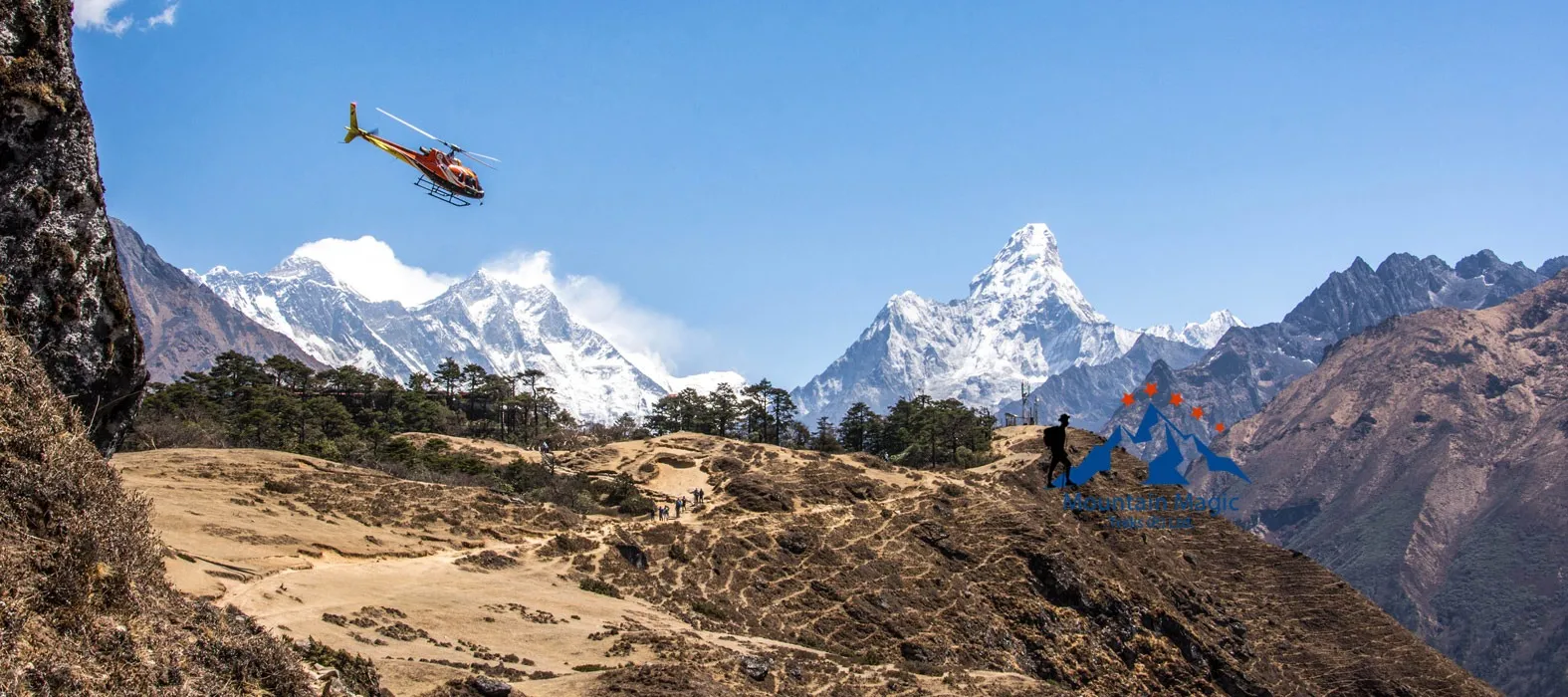
A trip to Everest does not have to mean spending weeks in the mountains.
For travelers who want to experience the famous trail but have less time, the Everest Base Camp Trek With Helicopter Return offers a practical way to enjoy the journey. You still walk through the heart of the Khumbu, sleep in mountain tea houses, visit Sherpa villages, and stand at Everest Base Camp. The difference comes when it is time to leave. Instead of walking back over the same trail, you fly out by helicopter.
The trip listed by Mountain Magic Treks takes 10 days and reaches Kala Patthar at about 5,545 meters. The return helicopter is planned from the Gorakshep area toward Kathmandu, with the exact flight depending on mountain conditions.
Start With the Mountains, Not the Clock
Many people worry about how much they can fit into an Everest trip.
That can make them focus too much on the schedule and forget why they came.
The better approach is to enjoy the route one section at a time. The trail begins around Lukla and moves through Phakding, Namche Bazaar, Tengboche, Dingboche, Lobuche, and Gorakshep before reaching Everest Base Camp.
Every place gives you something different.
Lukla Opens the Door to the Khumbu
The journey to Lukla is already part of the adventure.
The listed itinerary uses a shared helicopter flight from Kathmandu to Lukla. From there, the walking section begins toward Phakding. The first day on the trail is shorter, giving trekkers time to settle into the rhythm of mountain life.
You walk beside the Dudh Koshi River and pass small settlements, green hills, and local Buddhist sites.
It feels far removed from busy city life.
The Trail Slowly Takes You Higher
One of the most interesting things about Everest trekking is how slowly the landscape changes.
At first, there are green hills and trees. Later, the valley becomes wider and the mountains begin to dominate the view.
By the time you reach Dingboche, the surroundings look much more rugged.
Namche Gives You Time to Adjust
Namche Bazaar is more than a place to sleep.
It is one of the main settlements in the Khumbu region, with shops, cafes, bakeries, and mountain views. The itinerary includes an acclimatization day here, which can also be used for a short local hike.
This pause is important.
You are already above 3,400 meters, and the body needs time to adjust before you go much higher.
Follow the Trail Into Sherpa Country
The walk beyond Namche brings another side of the Everest region into view.
The route toward Tengboche passes through mountain landscapes where Sherpa culture is part of everyday life. Tengboche is especially known for its Buddhist monastery and broad views of the surrounding peaks.
Look Beyond the Famous Mountain
Everest gets most of the attention, but it is not the only mountain worth watching.
Ama Dablam is one of the most striking peaks along the route. Later, trekkers can also see Lhotse, Nuptse, Pumori, and other Himalayan peaks.
The variety keeps the walk interesting.
You are not staring at one mountain for ten days.
Dingboche Is a Good Place to Slow Down
The trail becomes more demanding as you climb.
Dingboche sits at around 4,410 meters, and the itinerary includes another acclimatization day here. One suggested activity is a hike toward Nangkartshang Peak, which gives views across the surrounding valleys and mountains.
Use the Rest Day Wisely
A rest day at this altitude is not wasted time.
A short hike can keep your body moving while allowing you to spend another night at the same elevation. You can also use the time to drink water, eat well, check your gear, and get extra sleep.
These simple habits matter more than trying to walk fast.
The High Trail Feels Completely Different
After Dingboche, the landscape becomes more open and rocky.
The trail continues toward Lobuche and the Khumbu Glacier. Along the way, trekkers pass the memorial area near Thukla, where memorials honor climbers who lost their lives in the Everest region.
This section can make the trip feel more serious.
You begin to understand just how extreme the environment can be.
Everest Base Camp Becomes the Main Goal
From Lobuche, the route continues toward Gorakshep before the final walk to Everest Base Camp.
The listed itinerary describes this as a long day of around 7 to 9 hours, with the highest point reaching about 5,364 meters at Base Camp.
By now, your pace may be much slower than it was near Lukla.
That is normal.
Carry Only What You Need
The walk to Base Camp is a good time to leave your larger luggage at the tea house.
A small daypack is enough for the essentials:
-
Water
-
Snacks
-
Warm clothing
-
Sunglasses
-
Camera or phone
-
Personal medication
-
Basic emergency items
There is no reason to carry your full trekking bag for a short out-and-back section.
The Last Morning Has Its Own Reward
After returning to Gorakshep, another major moment is still waiting.
The climb to Kala Patthar is one of the highlights of the itinerary. At around 5,545 meters, it provides a wide view of Mount Everest and the surrounding peaks. The route is short compared with some earlier trekking days, but the altitude makes every step count.
Sunrise Changes the Whole Scene
Early morning in the high Himalayas can be unforgettable.
The first light reaches the mountain peaks while the valleys below remain in shadow. Everest and the surrounding mountains slowly change color as the sun rises.
This is the kind of moment that does not need much explanation.
You simply stand there and watch.
The Return Journey Takes a New Direction
This is where the Everest Base Camp Trek With Helicopter Return becomes different from a standard Everest Base Camp itinerary.
Instead of walking back through the villages you already passed, you leave the high mountains by helicopter.
The trip page describes a return flight from the Gorakshep area to Kathmandu, with possible stops depending on weather, wind, and flight operations.
The Trail Looks Different From Above
For most of the trek, you see the Himalayas from the ground.
During the helicopter ride, the entire region opens up.
You can look down at valleys, glaciers, rivers, villages, forests, and the winding trail you spent days walking.
That change in perspective is one of the strongest parts of the trip.
Who Should Consider This Route?
This style of Everest trip can be useful for people who want the walking experience without adding several return days.
It may suit:
-
Travelers with limited vacation time
-
People who want to avoid repeating the same trail
-
First-time trekkers with suitable preparation
-
Couples and private groups
-
Travelers interested in both trekking and aerial views
The important thing is not to mistake the helicopter for an easy option.
The walking section still reaches extreme altitude and is rated moderate to strenuous on the trip page.
Final Thoughts
The Everest Base Camp Trek With Helicopter Return changes the way you experience the classic Everest journey.
You begin with a helicopter flight into Lukla, then spend days walking through valleys, villages, forests, and high mountain terrain. You adjust to the altitude, reach Everest Base Camp, climb Kala Patthar, and finally leave the region by air.
You get the slow experience and the fast experience in the same trip.
That is what makes this journey different.
The best memory may not be the moment you reach Base Camp. It may be the collection of small moments along the way—the sound of a river below a suspension bridge, a quiet morning in Dingboche, prayer flags moving in the wind, or the first sunlight touching Everest.
Those are the moments that turn a trek into a story worth remembering.
Frequently Asked Questions
Is the helicopter return included in the trek?
Yes. The listed package includes helicopter flights from Kathmandu to Lukla and from the Everest region back toward Kathmandu.
How many days does the trip take?
The listed journey is 10 days from arrival to departure in Kathmandu.
What is the highest point?
Kala Patthar is listed at about 5,545 meters and is the highest point of the itinerary.
Can weather affect the helicopter?
Yes. Mountain weather can change quickly. Wind and visibility can affect helicopter operations, so travelers should keep some flexibility in their plans.
Do I need acclimatization?
Yes. The itinerary includes acclimatization stops in both Namche Bazaar and Dingboche before the route reaches the highest sections.